How to Choose the Right Wireless Bridge for Africa Deployment?
By Mosslink Editorial Team · Updated 2025-11-10
I never imagined a dusty rooftop in Niger could stream HD CCTV footage over 5 km — until I saw it myself.
Imagine installing a wireless bridge on a church tower in a remote village, connecting it to a school miles away — no fiber, just air. That’s real connectivity.
That’s exactly what our Mosslink WB2500 and WB730 wireless bridges help you achieve — and more:
- Reliable long-distance PTP and PTMP wireless transmission
- Rugged, weatherproof enclosures for harsh climates
- Customizable firmware and country-specific frequency control
- Simple plug-and-play setup with OEM/ODM support
How do I determine the right transmission distance?
I once underestimated the terrain between two rural clinics — and lost 80% of signal strength.
Transmission distance depends not only on specs but also on line-of-sight, elevation, and surrounding obstructions. Never trust numbers alone — verify them on-site.
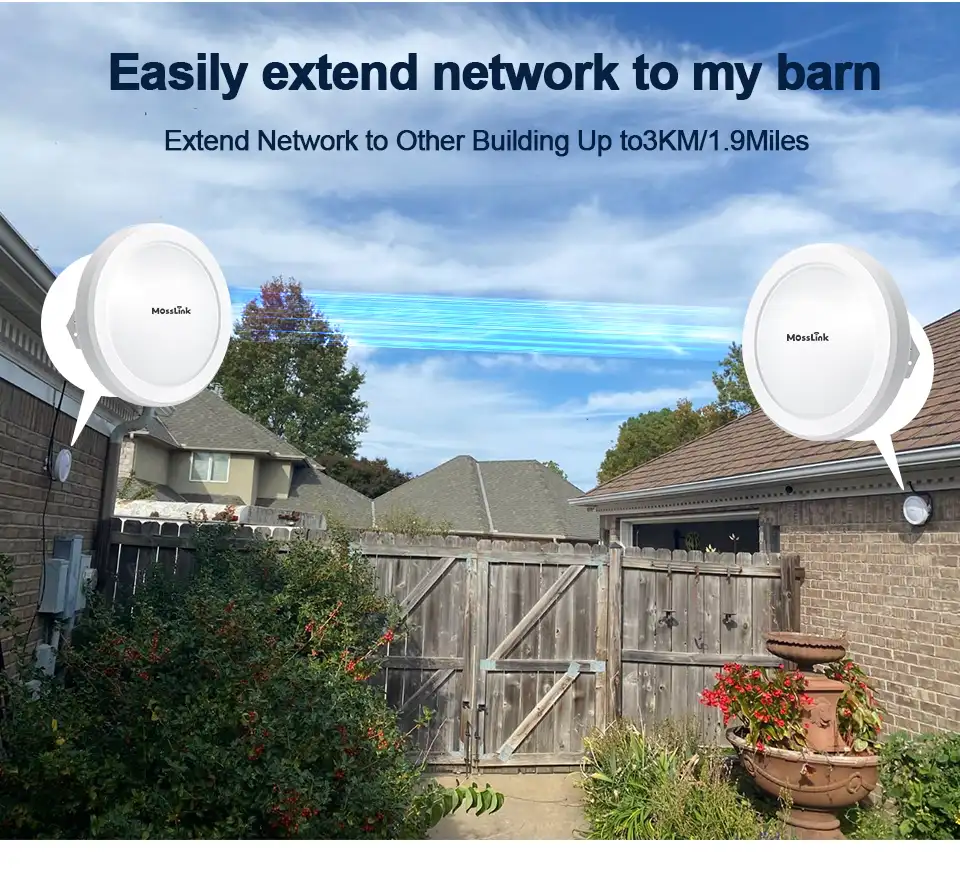
Accurate planning of line-of-sight improves link stability and range
Consider Distance + Terrain
Start by plotting the actual distance and elevation between your endpoints. For 1–5 km, our WB630 is sufficient. For 5–15 km, the WB730 with larger antennas is a better choice. Terrain impacts signal — avoid valleys and trees in the direct path.
Fresnel Zone Clearance
Even if line-of-sight is visually clear, you also need Fresnel zone clearance. This invisible oval-shaped zone allows radio waves to propagate fully. Obstructions like buildings or vegetation can disrupt this and cause signal loss.
Recommended Wireless Bridge Options by Distance
| Distance | Model | Antenna | Bandwidth |
|---|---|---|---|
| 1–3 km | WB630 | 16dBi Panel | 867Mbps |
| 3–7 km | WB730 | 18dBi Panel | 867Mbps |
| 7–15 km | WB5axH6-35 | 35dBi Dish | 1200Mbps |
What frequency band should I use for African rural and urban environments?
I nearly deployed 5.8GHz gear in a city where it’s banned. Lesson learned: ask before you act.
Different African countries regulate ISM bands differently. Verify local frequency laws — especially for 5 GHz and 60 GHz — before finalizing specs.
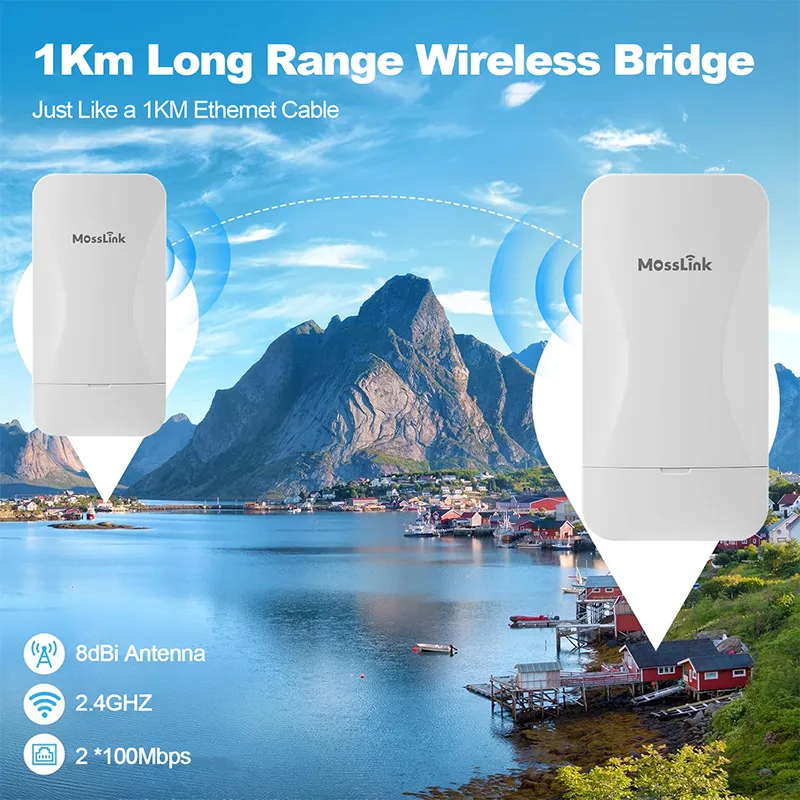
Choosing between 2.4GHz and 5GHz depends on foliage, regulation, and interference
Urban vs Rural Frequency Choices
Urban areas benefit from cleaner 5GHz bands, but these often require DFS and TPC support. Rural deployments may still rely on 2.4GHz bridges due to better foliage penetration. Our 2.4GHz models are used in forested areas and remote villages.
Custom Firmware for Frequency Compliance
At Mosslink, we pre-flash your devices to match regional rules. That includes disabling channels above 5.825GHz or adjusting Tx power under 30dBm, depending on country. This helps prevent customs delays and local interference issues.
Common Band Usage by Country
| Country | Allowed Band | Regulatory Note |
|---|---|---|
| Nigeria | 2.4GHz / 5.8GHz | DFS required |
| Burkina Faso | 2.4GHz / 5GHz | Limited to 30dBm EIRP |
| Morocco | 5.7GHz only | DFS/TPC mandatory |
If you’re unsure about your project requirements or what bridge model to choose, reach out to us here. Tell us your country, link distance, and terrain. We’ll recommend the best model — tested and proven across African deployments.
Share